HANDLOOM SAREES · UNSTITCHED SUIT MATERIALS · SOURCED DIRECTLY FROM WEAVERS · FREE SHIPPING ACROSS INDIA

Chanderi Saree Guide: Sheer Silk-Cotton Handloom

Weave Spotlight · The Craft
Chanderi saree:
light as air,
royal by history.
A sheer silk-cotton weave with centuries of royal patronage — what makes it glossy without being heavy, and how to wear it well.
6-minute read · Weave Spotlight
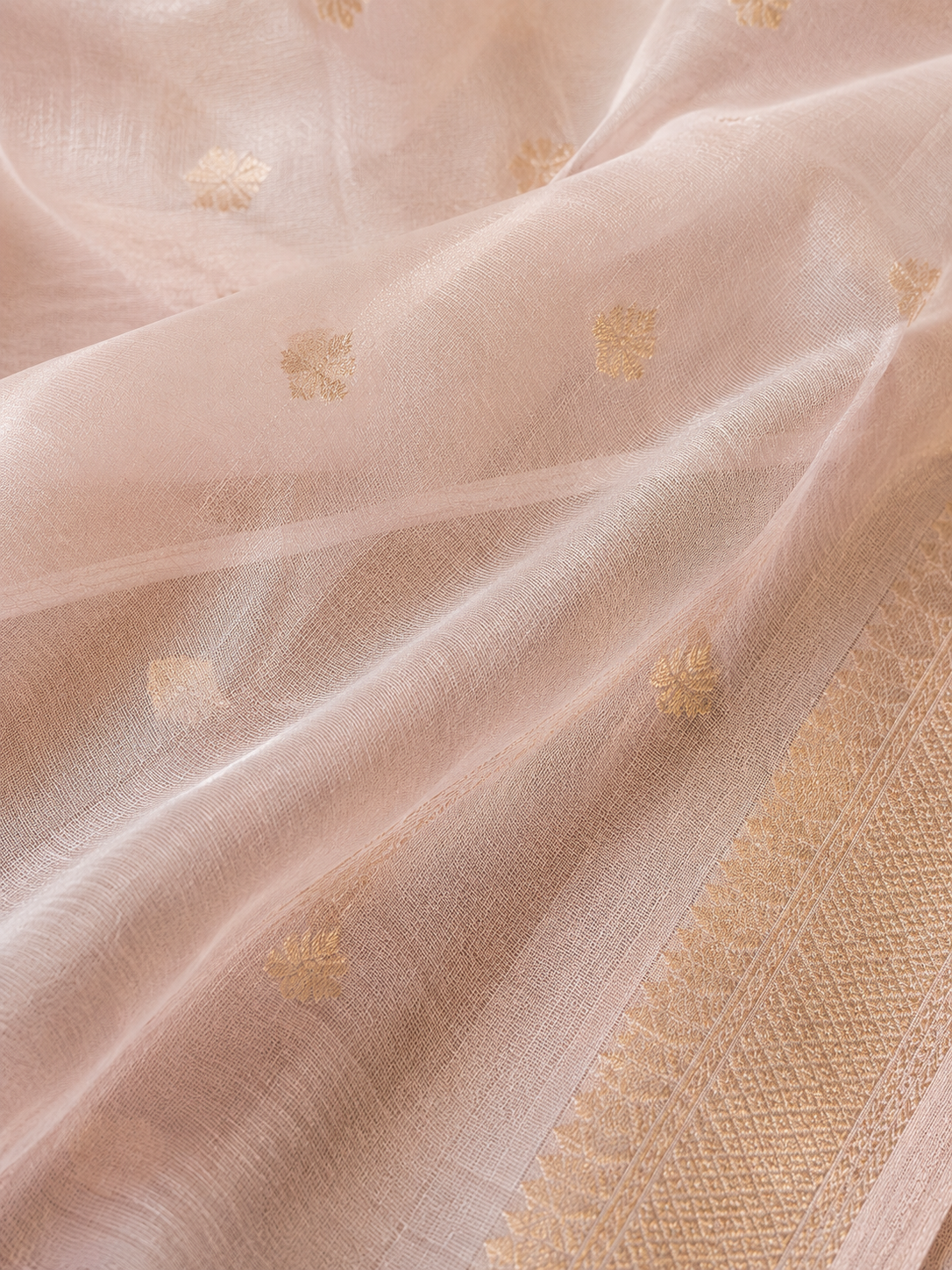
A Chanderi saree occupies a specific niche most other handloom sarees don’t — light enough to wear comfortably through a long, warm day, but with enough sheen and structure to feel formal rather than casual. Here’s what gives a Chanderi saree that particular balance.
01 — Origin
Where the Chanderi comes from
Chanderi takes its name from the town of Chanderi in Madhya Pradesh, where the weaving tradition dates back several centuries and enjoyed sustained royal patronage under the Scindia dynasty. The town’s location along historic trade routes also meant Chanderi weavers had early access to fine silk yarn, which shaped the fabric’s characteristic lightness and sheen.
02 — What makes it different
Chanderi saree: silk warp, cotton weft
Traditional Chanderi is woven using a silk warp (the lengthwise threads) combined with a cotton weft (the crosswise threads) — a blend that gives the fabric silk’s characteristic sheen while keeping the overall weight and drape closer to cotton. This combination is what makes Chanderi feel glossy without the heaviness of a pure silk saree like Kanjivaram or Benarasi.
Modern variants also exist in pure silk for a richer drape and higher price point, but the original — and still most common — construction is the silk-cotton blend that defines the fabric’s identity.
Why it photographs so well
Chanderi’s fine, sheer weave catches light in a way that reads beautifully in photographs — a big part of why it’s become a popular choice for daytime wedding events and receptions where good photos matter, without needing the visual weight of a heavier silk.
03 — How to tell it’s genuine
What to check
- Check the sheerness and sheen together. Genuine Chanderi has a distinct translucent quality combined with a soft sheen from the silk warp — a fabric that’s sheer but flat-looking (no shine) is more likely a plain cotton imitation.
- Feel the hand. It should feel crisp yet lightweight — not slippery like polyester, not heavy like pure silk.
- Look at the border and motifs. Traditional Chanderi often features fine zari or coin (buttis) motifs — genuine work has the same subtle hand-loom irregularity found across other true handloom weaves.
- Be cautious of very low prices. The silk warp component means genuine Chanderi has a real cost floor — pieces priced like plain cotton sarees are likely synthetic blends mimicking the look.
04 — What it costs
A rough price guide
| Type | What it means | Typical price |
|---|---|---|
| Synthetic blend, Chanderi-style print | Machine-made imitation of the sheer look | ₹1,000 – 2,500 |
| Genuine silk-cotton Chanderi | Traditional handloom construction | ₹4,000 – 12,000 |
| Pure silk Chanderi, fine zari motifs | Richer drape, higher silk content, detailed work | ₹12,000 – 25,000+ |
05 — Wearing and caring for it
Once you own one
Because Chanderi is sheer, most people wear it with a well-fitted underskirt or slip in a complementary color, since the fabric’s translucency is part of its character rather than something to fight against. It suits daytime events particularly well — receptions, lunches, lighter festive occasions — where a heavier silk might feel like too much.
Dry-clean is generally preferred given the silk content, though careful cold hand-washing works for pieces without heavy zari work. Avoid wringing, and iron on low heat — the fine weave can be damaged more easily than sturdier cottons.
06 — Common questions
Quick answers
Is Chanderi see-through?
It’s genuinely sheer/translucent by design — most people wear a matching underskirt or slip underneath, which is standard practice for this fabric rather than a workaround.
Is Chanderi warmer or cooler to wear than silk?
Noticeably cooler and lighter than a pure silk saree like Kanjivaram or Benarasi, thanks to the cotton weft — a large part of why it’s favored for daytime and warm-weather occasions.
Can Chanderi be worn for a wedding?
Yes, particularly for daytime wedding events, receptions, or mehendi functions where its lightness and photogenic sheen suit the occasion — it’s generally considered less formal than a heavy silk for the main ceremony itself.
Looking for a Chanderi saree?
We post genuine silk-cotton Chanderi pieces in the WhatsApp circle as they arrive — light, glossy, and ready for your next daytime event.