HANDLOOM SAREES · UNSTITCHED SUIT MATERIALS · SOURCED DIRECTLY FROM WEAVERS · FREE SHIPPING ACROSS INDIA

Mangalgiri Saree Guide: Affordable Real Handloom

Weave Spotlight · The Craft
Mangalgiri saree:
handloom that doesn’t
cost a fortune.
Crisp cotton, a clean zari border, and a genuine handloom weave that starts under ₹3,000 — here’s why it’s the most underrated saree on this list.
6-minute read · Weave Spotlight
Most of the sarees worth writing about are expensive because they’re difficult to make. Mangalgiri is worth writing about for the opposite reason — it’s genuine handloom, quietly well-made, and one of the few true handloom sarees that doesn’t require a special occasion or a big budget to own.
01 — Origin
Where the Mangalgiri comes from
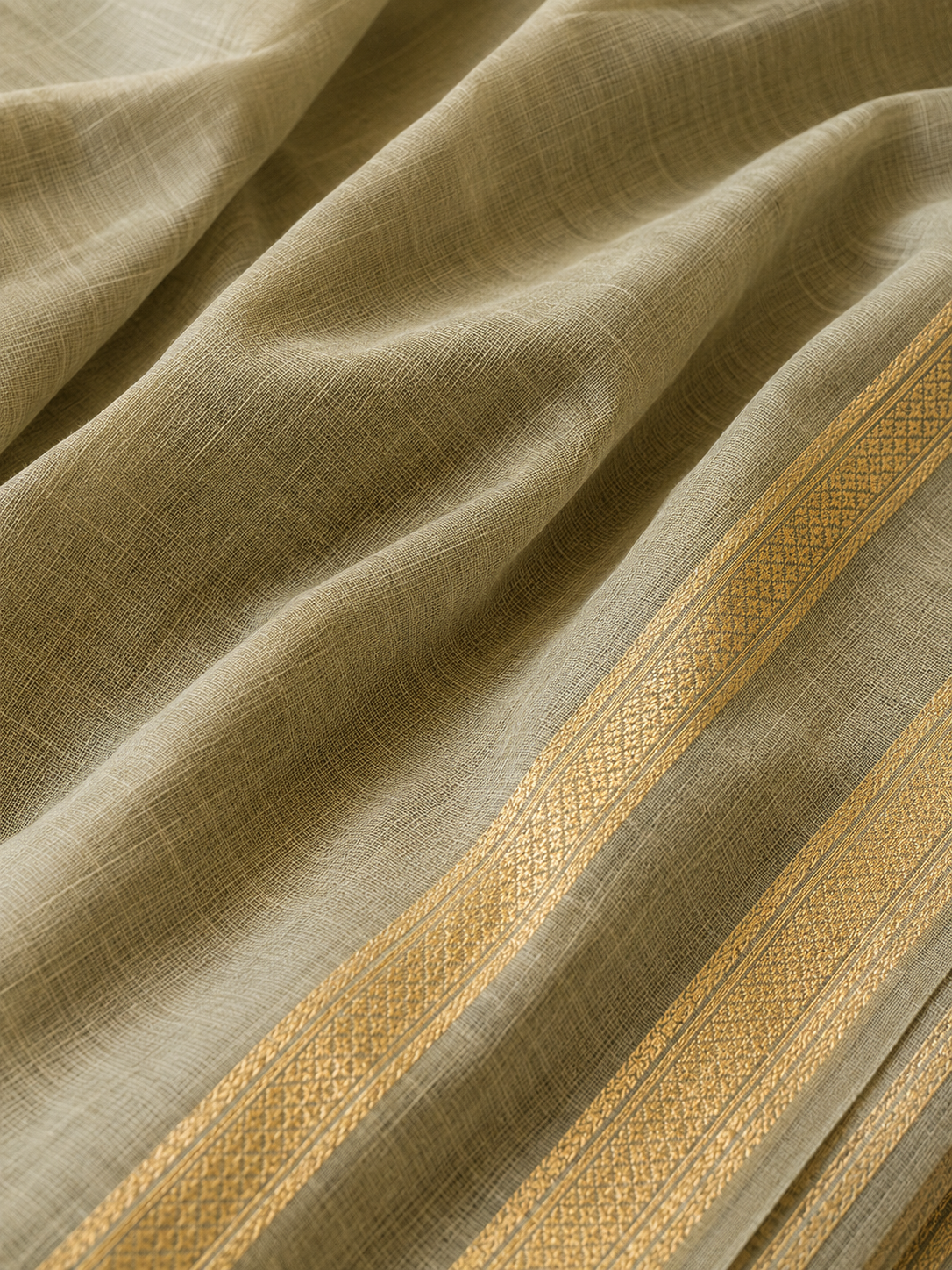
Mangalgiri saree takes its name from Mangalagiri, a small temple town in Andhra Pradesh, where pit-loom cotton weaving has been practiced for generations. Unlike weaves built around elaborate motifs or heavy zari work, Mangalgiri’s identity is built on restraint — clean, understated cotton with a distinctive border, designed for daily wear rather than display.
02 — What makes it different
The Nizam border
Mangalgiri’s signature feature is its border style, often called the Nizam border — a solid zari-edged border with no pallu motifs or elaborate patterning across the body of the saree. This is a deliberate design choice, not a limitation: the fabric itself is woven tightly and crisply, letting the border do the visual work while the body stays clean and versatile.
This simplicity is exactly why Mangalgiri pairs with almost any blouse and any occasion that doesn’t call for heavy ornamentation — it’s the handloom equivalent of a well-made basic, not a statement piece.
Why it’s genuinely affordable
Mangalgiri stays inexpensive relative to other handlooms for structural reasons, not because it’s lower quality — it uses cotton rather than silk (a cheaper raw material), and the plain-weave body without dense motif work weaves considerably faster than something like Jamdani or Kanjivaram. The affordability is a function of the design, not a shortcut in how it’s made.
03 — How to tell it’s genuine
What to check
- Feel the weave density. Genuine Mangalgiri cotton has a distinctly crisp, tightly-woven hand — noticeably different from the softer, looser feel of a plain machine-woven cotton saree.
- Check the border join. The zari border should feel woven into the fabric at the edge, not stitched or printed on separately.
- Look at the price. Because Mangalgiri is already affordable as genuine handloom, an unusually low price (well under ₹2,000) more likely signals a powerloom or machine-printed imitation rather than a real bargain.
- Expect some initial stiffness. New Mangalgiri cotton is noticeably crisp and softens with washing — this stiffness is actually a reasonable sign of genuine weave density, not a flaw.
04 — What it costs
A rough price guide
| Type | What it means | Typical price |
|---|---|---|
| Machine-woven cotton, printed border | Mass-produced imitation | ₹500 – 1,200 |
| Genuine handloom Mangalgiri, simple border | Authentic weave, standard zari border | ₹2,500 – 5,000 |
| Fine-count Mangalgiri, wider zari border | Higher thread count, more elaborate border work | ₹5,000 – 9,000 |
05 — Wearing and caring for it
Once you own one
Mangalgiri is genuinely comfortable in Indian summer heat — the crisp cotton weave breathes well and doesn’t cling. It’s a strong choice for office wear, everyday errands, or any setting that calls for something put-together but not formal. Because it’s cotton rather than delicate silk, care is refreshingly low-maintenance: hand-wash or gentle machine wash, and iron slightly damp for the crispest finish.
The one thing to watch is the zari border, which can tarnish if stored in a damp environment — keep it dry and it’ll hold up well over years of regular wear.
06 — Common questions
Quick answers
Is Mangalgiri suitable for daily wear?
Yes — it’s specifically well-suited to daily and office wear given its lightweight cotton construction, breathability, and understated design that doesn’t need a special occasion to justify wearing it.
Why doesn’t Mangalgiri have pallu motifs like other handloom sarees?
It’s a deliberate stylistic choice specific to this weaving tradition — the design emphasizes a clean body and a defined border rather than elaborate motif work across the pallu, distinguishing it from more ornate weaves like Kanjivaram or Benarasi.
Does Mangalgiri come in silk?
Cotton is the traditional and most common base, though some silk-cotton blend variants exist at a higher price point. Pure cotton remains the defining, most widely available version.
Want an everyday handloom saree?
We post genuine Mangalgiri pieces in the WhatsApp circle regularly — real handloom, without the heirloom price tag.