HANDLOOM SAREES · UNSTITCHED SUIT MATERIALS · SOURCED DIRECTLY FROM WEAVERS · FREE SHIPPING ACROSS INDIA

What to Wear for Eid: A Handloom Guide to Suits and Sarees

Buying Guide · Eid
Eid:
soft colours, fresh start.
What to wear for Eid: pastel and ivory handloom suits and sarees for the morning, family visits, and the evening dawat, plus when to book your tailor.
6-minute read · Buying Guide
Eid is a day for new clothes and full homes. If you are deciding what to wear for Eid, think comfort for the long day, a fresh colour for the morning, and something richer for the evening.
01 — The mood of the day
What to wear for Eid: soft colours, fresh and bright
Eid is a day of new clothes, family visits, and long meals. If you are working out what to wear for Eid, the traditional answer is something new, clean, and celebratory: pastels and light colours in the morning, and richer tones in the evening. The date also depends on the moon, so it may move by a day, which is one more reason to decide your outfit early.
02 — Colours
A palette for Eid
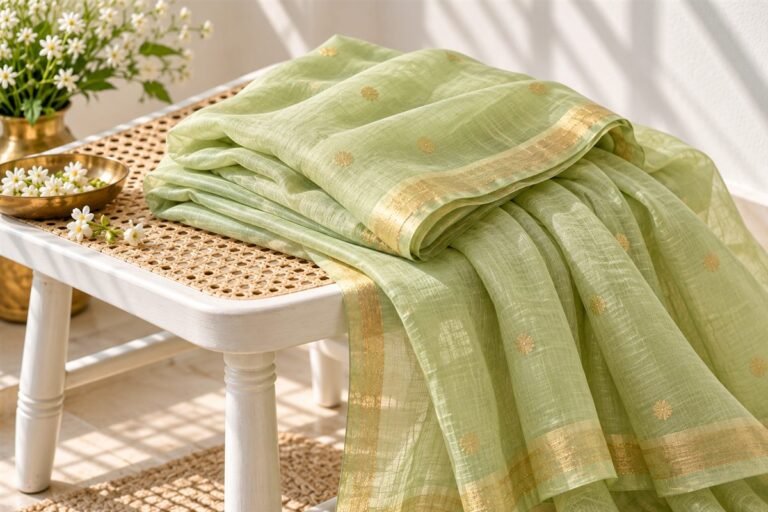
Soft pastels such as mint, powder pink, sky blue, lilac, and cream suit the morning. Ivory and white with gold look elegant for prayers and visits. For the evening get-together, deeper jewel tones like emerald, plum, and wine bring the contrast. Pick one anchor colour and match the dupatta or blouse to it, and the rest follows.
03 — Three moments
Morning, visits, and the evening dawat
Morning prayers
Light, modest, and comfortable
You may be sitting and standing for a while, so a soft, breathable fabric matters. A pastel cotton-silk or Chanderi suit or saree, with a full-coverage dupatta, is easy to wear.
Family visits
Cheerful and easy to move in
Visits mean getting in and out of cars and sitting on sofas and floors. Choose a light handloom in a fresh colour, and keep jewellery simple.
Evening dawat
Richer, and dressed up
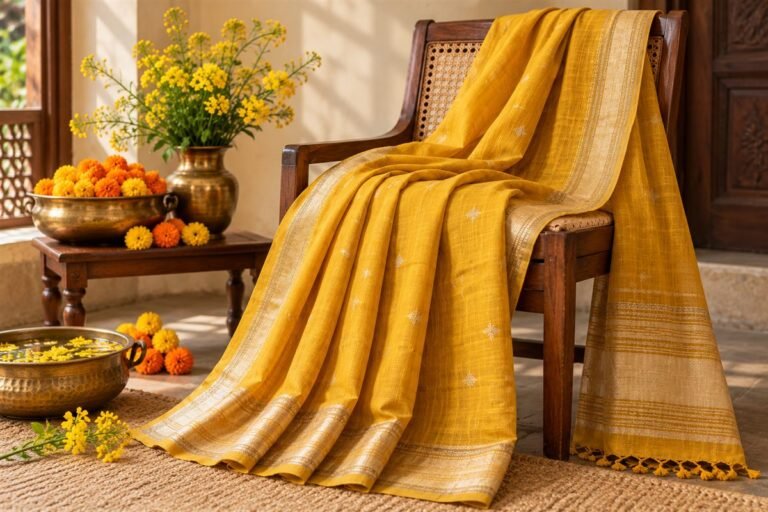
For the dinner, go for a silk or silk-cotton with some zari, in a jewel tone. A statement dupatta over a simple suit is just as festive as a saree.
Order your stitching early
If you are buying unstitched suit material for Eid, give your tailor a couple of weeks. The week before a festival is when every tailor is busiest, and rushed stitching rarely fits well.
04 — Suit or saree
Unstitched suits are a good Eid choice
Many people prefer a suit for Eid, and handloom suit material gives you a fabric you cannot buy ready-made: Chanderi, silk-cotton, or a block-print cotton, stitched to your fit. Our guide to blouse designs and jewellery guide also work for suits and dupattas, so you can plan the whole look together. If you are choosing between formats, what to wear for Eid comes down to comfort first and sparkle second.
05 — Common questions
Quick answers
What should I wear for Eid?
Something new, clean and festive: pastels or ivory in the morning, and richer jewel tones in the evening. A handloom suit or saree in a soft, breathable fabric is a comfortable choice.
What colours are good for Eid?
Mint, powder pink, sky blue, lilac, cream, and ivory with gold are popular for the day, with emerald, plum, and wine for the evening.
Is a saree or a suit better for Eid?
Both work. A suit is easier to move in, and a saree suits the evening. Choose what you are comfortable in for a long day of visits.
How early should I get my suit stitched?
Allow your tailor at least a couple of weeks before Eid, since tailors get very busy just before the festival.
More festival guides
Planning around the festive calendar? See what to wear for Navratri, Durga Puja, Karva Chauth, Dhanteras to Bhai Dooj, Diwali parties, Christmas and New Year, Pongal and Sankranti, Basant Panchami, Holi, summer weddings and winter weddings.
Planning your Eid outfit?
Tell us your colours and budget over WhatsApp, and we will suggest what to wear for Eid in handloom suits and sarees.