HANDLOOM SAREES · UNSTITCHED SUIT MATERIALS · SOURCED DIRECTLY FROM WEAVERS · FREE SHIPPING ACROSS INDIA

Tussar Silk Saree: Wild Silk with a Natural Golden Glow

Weave Spotlight · The Craft
Tussar silk:
the wild one.
A tussar silk saree is woven from wild silk, with a natural golden colour and a textured, matte finish. Origin, how it differs from mulberry silk, how to tell a real one, and price.
6-minute read · Weave Spotlight
Tussar is silk with a difference: wild, textured, and naturally golden. Here is where a tussar silk saree comes from, and how to spot a genuine one.
01 — Origin
Where does a tussar silk saree come from?
Tussar silk comes from wild silkworms, not the cultivated ones that produce mulberry silk. A tussar silk saree is woven from yarn reeled from cocoons of the Antheraea silkworm, which feeds on forest trees. The silk is made in eastern and central India, including Jharkhand, Chhattisgarh, Bihar, Odisha, and West Bengal, and Bhagalpur in Bihar is one of its best-known weaving centres.
02 — What makes it different
Wild silk, with a natural gold
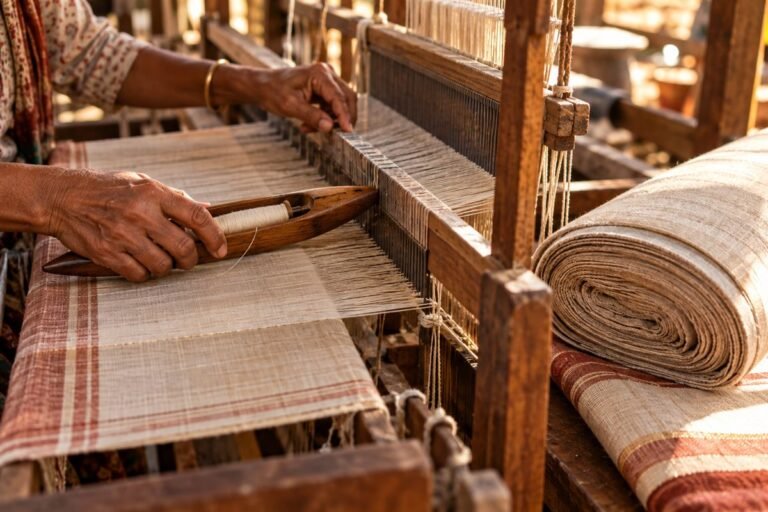
Tussar is coarser and more textured than mulberry silk, with a natural golden, honey, or beige colour. It has a soft, matte sheen instead of a glossy one, and a slightly rough, slubbed feel, especially in the rougher type often called ghicha. A tussar silk saree is also lighter and cooler to wear than a heavy silk, which makes it a good choice for warm weather and long days.
The natural colour takes dyes well, so tussar comes in earthy neutrals as well as strong colours, often with hand-painted, block-printed, or embroidered designs.
Tussar or Kosa?
Kosa silk, from Chhattisgarh, is a kind of tussar. If you see both names, they are closely related, and Kosa is simply the regional name.
03 — Wearing it
Easy elegance, day to evening
A tussar silk saree has a relaxed, handsome look. It suits office days, daytime festivals, and family functions, and it pairs well with simple gold or oxidised silver jewellery. Its natural texture works best with a clean, contrast blouse, and our blouse designs guide explains the choices. If you wear it for work, our guide to wearing a saree to work explains pinning and comfort.
04 — How to tell it is genuine
Checks and a rough price
Look for the natural, slightly uneven texture and the soft, matte sheen. A very smooth, glossy, perfectly even “tussar” is more likely to be a different fibre. Check the colour: natural tussar is a warm golden or beige, not a bright white. As a rough guide, a handloom tussar silk saree costs from around ₹4,000 to ₹15,000, and finer, painted, or embroidered pieces cost more. These are rough ranges, not a price list. A very low price points to a blend or an imitation. Our handloom saree price guide and guide to real handloom versus fake cover the signs.
05 — Care
Looking after wild silk
Dry clean a tussar silk saree, especially if it is painted or embroidered. Keep it out of direct sunlight, which can fade the natural colour, and store it folded in soft muslin. Avoid harsh perfumes and sprays near the silk.
06 — Common questions
Quick answers
What is a tussar silk saree?
A saree woven from wild silk, produced by silkworms that feed on forest trees. It has a natural golden colour and a soft, textured, matte look.
How is tussar different from mulberry silk?
Tussar is coarser, more textured, and less glossy than mulberry silk, and it is lighter and cooler to wear.
Is tussar silk good for summer?
Yes. It is lighter and cooler than heavier silks, which makes it comfortable in warm weather.
How much does a tussar silk saree cost?
Roughly ₹4,000 to ₹15,000 for handloom pieces, and more for painted or embroidered ones. These are rough ranges, not a price list.
Looking for a tussar silk saree?
Tell us your occasion and budget over WhatsApp and we will tell you honestly what is available in tussar.